
Author: Marcus Vance, Senior Consumer Credit & Financial Risk Analyst
Reviewed by: US Consumer Banking Compliance Editorial Board
Last Updated: 2026
Regulatory Disclaimer: This guide is presented for educational and informational purposes under United States consumer financial protection guidelines. It does not constitute formal underwriting advice or a binding agreement with any specific credit depository institution. Consult your issuing bank for institutional terms.
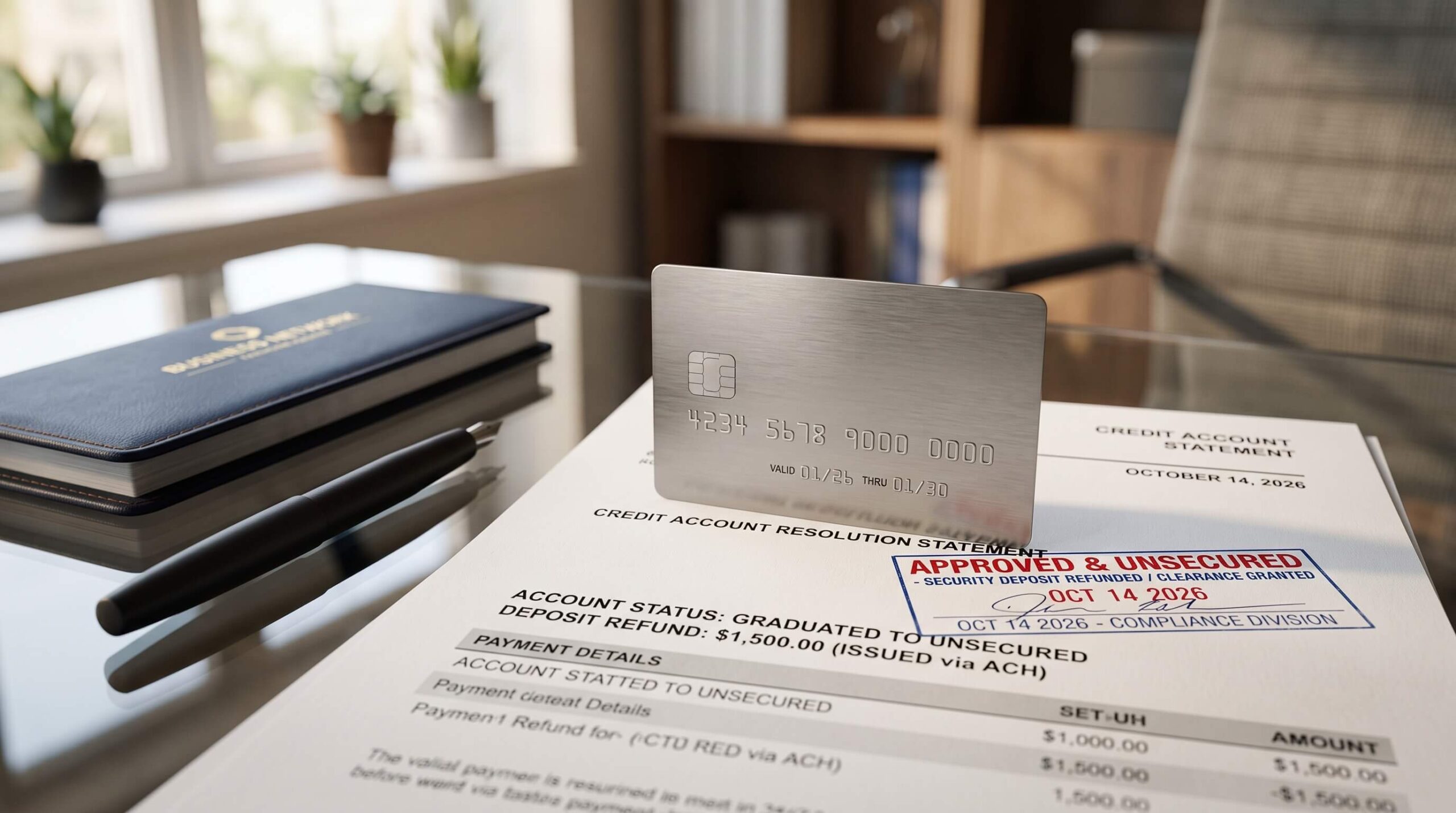
Receiving notification that your secured credit card deposit refunded but account open status continues can catch cardholders off guard. Many consumers assume that reclaiming an upfront cash collateral deposit means their account is being closed or discontinued.
In reality, seeing your secured credit card deposit refunded but account open signifies a major financial milestone known as “account graduation.” Major lending institutions issue this status change when a borrower transitions successfully from high-risk monitoring to an unsecured credit line without losing their trade line.
Understanding this balance shift ensures you do not inadvertently trigger reporting errors or close an account that is actively elevating your credit profile.
What Does “Deposit Refunded but Account Open” Actually Mean?
When an issuer processes your secured credit card deposit refunded but account open transition, they have determined that your risk tier has normalized. Your initial collateral deposit served as an insurance buffer against payment defaults during your early credit-building stages.
[Initial Security Deposit Placed] ➔ [6-12 Months On-Time Payments] ➔ [Bank Upgrades Profile to Unsecured] ➔ [Deposit Returned / Account Stays Intact]
Graduation allows you to maintain the exact same credit account, card number, and payment history. The only operational difference is that the financial institution no longer requires cash collateral to back your revolving credit limit.
Unlike closing an account to retrieve your funds, this transition keeps your tradeline intact. It reflects sustained positive payment patterns on consumer reports, much like qualifying for best auto insurance for high risk drivers after demonstrating clean DMV records.
How Banks Distribute Your Collateral Refund
Financial institutions handle the actual disbursement of your security funds through distinct payment channels. The distribution method generally depends on your current statement balance and the preferences designated in your online banking portal.
| Distribution Method | Processing Timeline | Common Account Trigger |
| Statement Credit | Immediate (1 to 2 business days) | Outstanding balances currently posted on the card |
| Direct Deposit (ACH) | 3 to 7 business days | Zero account balance with linked external checking account |
| Mailed Paper Check | 10 to 21 business days | Unlinked checking accounts or outdated direct deposit settings |
If you carry an active revolving balance at the time of graduation, most issuers apply the refund directly against your unpaid charges. For example, if you maintain an unpaid $150 charge and your deposit was $300, the bank clears your $150 balance and sends the remaining $150 via bank transfer or physical check.
If you have entirely cleared your charges, the entire sum is released directly. Borrowers managing collateral transitions alongside other debts often leverage structured personal loan rates eligibility guide frameworks to consolidate separate liabilities while waiting for their deposit funds to clear.
The Core Credit Score Advantages of Account Graduation
Having your secured credit card deposit refunded but account open status recognized provides three immediate structural advantages to your FICO and VantageScore models.
Step 1: Account Keeps Original Opening Date (Preserves AAoA)
   │
Step 2: Security Deposit Releases to Liquidity
   │
Step 3: Credit Line Often Increases (Lowers Utilization Ratio)
   │
Step 4: Future Underwriting Hurdles Lower (Mortgages / Auto Loans)
- Preservation of Account History: Closing a card to manually recover cash wipes out a positive revolving line, lowering your Average Age of Accounts (AAoA) over time. Keeping the tradeline open permanently preserves your established credit age.
- Immediate Utilization Drop: Banks frequently pair graduation with an unprompted credit limit increase. If your initial collateral limit was $500 and the bank elevates it to $1,500 upon refund, your credit utilization ratio drops automatically.
- No Hard Inquiry Penalty: Standard graduation reviews rely on recurring internal algorithmic assessments or soft credit pulls. You receive the benefits of an unsecured account without taking a temporary hard-inquiry score drop.
Maintaining clean revolving history on your newly unsecured account forms an essential foundation when later preparing for larger home financing avenues, such as first time home buyer programs for low credit scores.
Major US Issuers: Graduation Timelines Compared
Every national depository operates under independent risk mitigation policies regarding how many billing cycles must elapse before graduating a borrower.
The following data outlines standard review practices documented across major national institutions regulated by the Consumer Financial Protection Bureau:
| Financial Institution | Typical Review Milestone | Default Refund Mechanism | Automatic Limit Bump? |
| Discover it® Secured | Month 7 (Automatic monthly review) | Direct Deposit / Check | Frequent |
| Capital One Platinum Secured | Months 6 to 12 (Periodic evaluation) | Statement Credit / Check | Case-by-case |
| Bank of America Customized Cash | Months 12+ (Annual compliance check) | Direct Deposit to BofA Account | Moderate |
| Citi® Secured Mastercard® | Month 18 (Structured underwriting audit) | Mailed Check | Infrequent |
Ensure your verified mailing address and linked bank routing details remain up to date. Issuers routinely delay paper disbursements if security checks detect recent unverified address modifications.
Potential Pitfalls to Avoid After Graduation
While securing your cash back represents substantial progress, mismanaging your account post-graduation can quickly undo your improvements.
Do not dramatically inflate your transaction volumes simply because your credit limit was expanded. Carrying elevated balances damages your debt-to-income and utilization metrics, which creates complications when self-employed individuals attempt to secure funding via a bank statement mortgage self employed process.
Additionally, monitor your newly unsecured card for secondary terms. Some secured cards transition directly into products with annual fees if you originally opened a subprime credit builder product. Contact your issuer to verify that your card has transitioned into a no-annual-fee tier.
Frequently Asked Questions
Why did I get my secured credit card deposit refunded but account open remains active?
Your issuer completed an internal risk review and determined that your consistent on-time payment track record qualifies you for an unsecured line of credit. Your cash collateral is returned, but the account remains active so you do not lose your accumulated payment history.
Will my physical card stop working when my deposit is refunded?
No. In almost all instances, your current plastic card remains active with the same card number, PIN, and expiration date. Some institutions may mail an updated card design reflecting an unsecured product name, but your existing card works uninterrupted until you activate the replacement.
Can I request my deposit back without waiting for the bank to graduate me?
You can request your deposit back at any time, but if the bank has not formally approved graduation, requesting your deposit back requires closing the account entirely. Doing so forfeits your credit limit and can harm your overall credit utilization ratio.
Does getting my deposit refunded trigger a hard inquiry on my credit report?
No. Automated account graduation reviews utilize internal performance evaluations and routine soft credit inquiries. Your credit profile will reflect the updated status or expanded credit line without sustaining a hard inquiry penalty.

Md Badsha Alam is a content strategist and digital writer specializing in Personal Finance . With years of experience researching emerging industry trends and financial technologies, he crafts data-driven guides and in-depth analyses designed to help readers make informed decisions. When not writing, Md Badsha Alam tests digital tools and tracks industry developments.